Another of the most used materials in Jewelry is the silver for its elegance and versatility.
It is so versatile that it is able to complement any style.
It is a metal that is easily combined with precious stones, Semi-precious stones, naturals stones and all kinds of materials.
Compared to gold and other metals, silver has a much more affordable value, so it’s an excellent option for those who want to invest in quality pieces without spending a lot of money.
But as with gold, there are different types of silver depending on their purity.
| METAL | DESCRIPTION
|
|
· Pure Silver – Silver |
Type of silver with the highest purity on the market and is not mixed with other metals
|
|
· 925 SILVER |
It has a purity of 92.5% and contains 7.5% copper or other metals. It is a high-quality silver, durable, and has a special luster.
|
|
· 950 SILVER
|
950 silver contains 95% silver. It’s purer and shinier than the previous silver, but also softer and less durable.
|
WHAT DOES STERLING SILVER MEAN?
Silver is a chemical element that appears on the periodic table with the symbol Ag
(Latin: Argentum).
This precious metal has atomic number 47 and belongs to the transition metal series. It is easily malleable but can be formed into very strong and durable shapes, making it one of the most widely used materials in jewelry.
This term refers to the minimum degree of purity of a jewel.
That is, a material with a purity of 92.5% or higher can be considered sterling silver.
This includes 925 and 950 silver.
How is this metal extracted from the earth?
Silver is a material from another galaxy. No, this isn’t just a marketing slogan, it’s a reality. Scientific discoveries in recent years have revealed that silver, like gold, arrived on Earth via asteroids from the dwarf galaxy Reticulum II. Located 98,000 light-years from our planet, it has or had the extreme conditions necessary for neutron star collisions, resulting in gold and silver, metals that cannot be created on Earth.
Silver is one of the most striking and sought-after metals in the world. This material has been widely used in jewelry and accessories since ancient times, where it held symbolic value and was one of the most widely traded products in various countries.
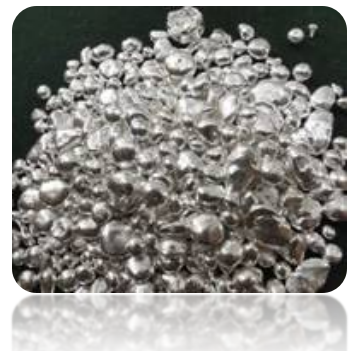
However, silver has become scarce in recent years because it is not a metal extracted directly from the earth in a mine. According to several experts, there is no specific location where miners work to extract silver; it is produced in nuggets and comes out of the earth combined with lead, copper, gold, or zinc.
Silver is an alloy of various natural materials that have been combined underground for decades. To extract the metal from the subsoil, miners must employ various techniques that are “destructive” and “corrosive” to the environment. These are two of the key factors that led several countries around the world to ban this type of mining.
The process of extracting silver from ores. Some mines used chemicals placed in the ground to separate pure silver from other materials buried in the earth. Currently, it’s very rare to find mines dedicated to silver, and the metal used in jewelry around the world is “recycled” or “Eco silver.”
For companies involved in mining and precious metal extraction, extracting silver from the ground is not profitable, as it is a costly process with few benefits. This is another reason why mining companies focus on lead, gold, and zinc. “Silver is the tip,” the union says.
Some experts claim that silver is a material that will depreciate more rapidly in the coming years, despite its current high price.
Biografi: https://www.eltiempo.com/economia/sectores/plata-como-se-extrae-este-metal-de-la-tierra-773635
Silver DEPOSITS
The main silver producers are countries such as Mexico, the United States, Canada, Peru, Australia, Argentina, Japan, and the Belgian Congo. The history of silver jewelry is documented since 5000 BC. At that time, there were already methods that detailed how to separate gold and silver. Both were extracted from the earth, with lead contents. But it was the Spanish who, in their conquests of the American continent, encountered the natives and developed the search for silver. In 1516, Juan Díaz de Solís (Spanish) would mark the first sighting of what is now called the Rio de la Plata, and then apparently, around 1554, the name “Terra Argentea” also appears, for Argentina (country), whose origin comes from the word PLATA, from the Latin “argentum” (the origin of the name Silver), and the Spanish word “argénteo”