Although many people don’t know it, most of the metals our jewelry is made of play a very important role in our emotions and well-being.
Each metallic component accentuates a wonderful contrast between the piece, the gems or stones, and your skin tone, helping to add strength and color to your look.
In this article, you can learn about each of them:
GOLD (Au):
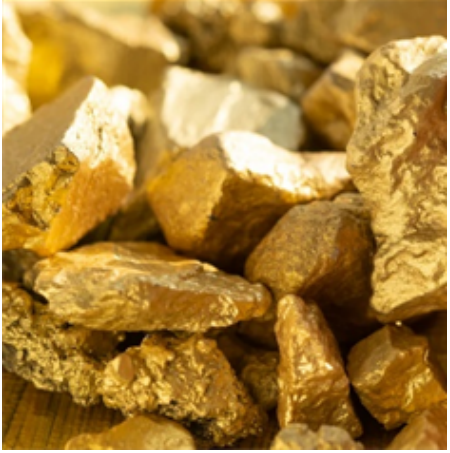
Its name comes from the Latin “aurum,” and since ancient times, gold has been considered by humanity to be one of the most valuable and coveted precious metals on earth due to its weight and nobility. Thus, it has become a symbol of economic power.
Gold is a metal that has the ability to generate feelings of luxury and success in people. It is said to uplift the spirits and promote a feeling of warmth and security.
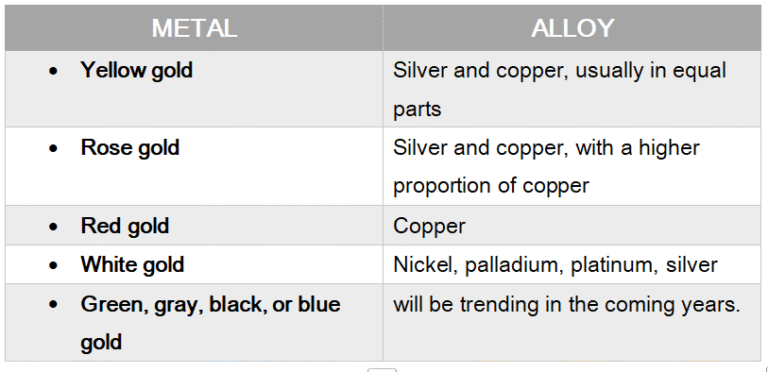
Different metals can be used as an alloy, and the final color of the gold will depend on which one is used.
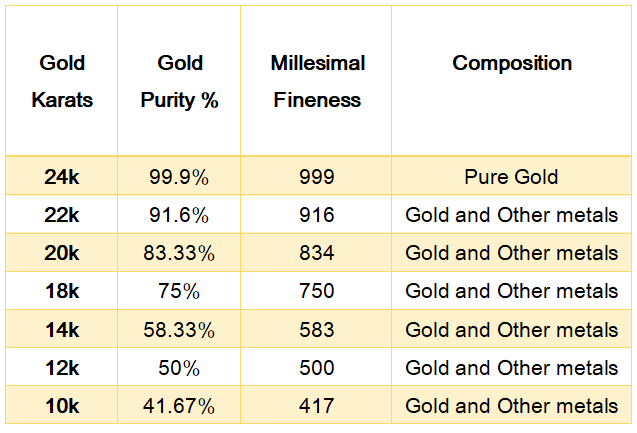
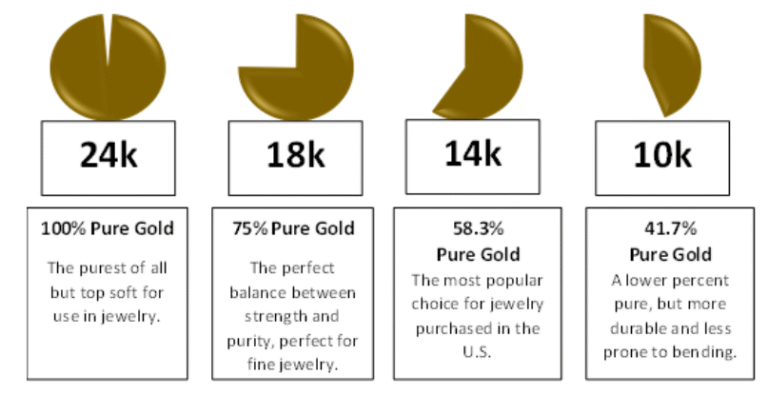
9k gold has a very low percentage of gold—well under half of its composition is gold. It can cause allergies, rust, and is generally considered low quality.
9k gold cannot be legally marketed as “gold” in the US and some other countries.
HOW GOLD IS FORMED?
The rarity of this metal on our planet is due to the very specific conditions for its formation.
According to scientific studies, the gold present on Earth comes from neutron star collisions in outer space. This precious metal is created at the point of collapse during supernovae (stars in the final stages of their lives).
When the planet was forming, many meteorites containing gold ended up crashing into Earth as a result of collisions in the universe, in which matter is heated and compressed to such an extent that lighter atoms, such as iron, fuse, giving rise to heavier elements and thus creating gold deposits on the planet.
These gold deposits form when hot water flows through rocks, dissolving tiny amounts of gold and concentrating it in cracks in the Earth’s crust to levels invisible to the naked eye.
While the formation of large gold veins typically takes tens to hundreds of thousands of years, these highly valuable deposits can form in just a few years, months, or even days!
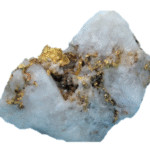
How is it possible that they form so quickly?
In fact, hydrothermal veins supply much of the gold found on Earth and, in some rare cases, can lead to the formation of massive gold veins even several centimeters thick. Also known as bonanza deposits, the concentration of these gold veins is millions of times greater than the typical gold concentration in the Earth’s crust, making them important targets for exploration and mining.
Because it is relatively inert, it is usually found as a metal, sometimes as large nuggets, but usually found in small inclusions in some minerals, quartz veins, slate, metamorphic rocks, and alluvial deposits originating from these sources.